
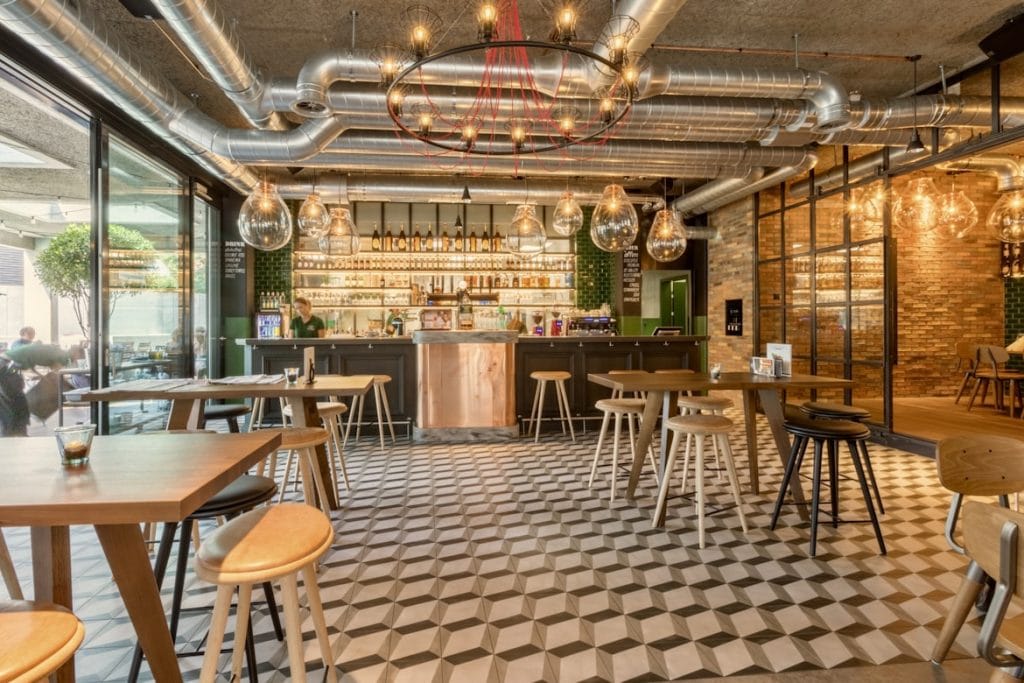
Maple Lantern Capital advised a Swiss multi-brand restaurant operator on a combined growth capital and operational transformation initiative designed to support expansion while preserving founder control and financial flexibility.
What began as a request to review financing proposals evolved into a broader engagement involving unit-level profitability analysis, capital structure design, lender negotiations, and post-close operational advisory.
The outcome was a financing solution that reduced cost of capital, avoided unnecessary leverage, improved operational efficiency, and provided the foundations for disciplined future expansion.
Client Overview
| Category | Details |
|---|---|
| Sector | Casual Dining & Hospitality |
| Geography | Switzerland |
| Primary Markets | Zurich, Basel, Geneva |
| Scale at Engagement | 18 locations across 3 concepts |
| Annual Revenue | CHF 42 million |
| Ownership Structure | Founder-led second-generation family business |
| Engagement Scope | Growth Capital Advisory & Operational Strategy |
| Duration | 7-month transaction process followed by a 12-month advisory engagement |
The Situation
Over approximately fifteen years, the business had expanded from a single Zurich restaurant into an 18-location hospitality group operating multiple concepts across Switzerland.
The company had achieved this growth without external equity capital and maintained a conservative balance sheet supported primarily through traditional banking relationships.
Despite healthy underlying demand and same-store sales growth of approximately 6% year-over-year, management faced increasing pressure from several structural factors:
- Rising commercial rents in major Swiss cities.
- Food cost inflation across key categories.
- Labour cost increases driven by hospitality wage agreements.
- Capacity constraints within the central production and logistics infrastructure.
- Limited internal experience managing institutional financing processes.
The founders had identified an ambitious next phase of growth:
- Opening six to eight additional locations over a three-year period.
- Expanding production capabilities.
- Modernizing logistics operations.
- Preserving long-term family ownership and operational control.
Their existing banking partners were only able to support a portion of the required capital expenditure programme, leading the founders to explore external financing alternatives for the first time.
The Initial Ask
The engagement began with a relatively narrow mandate:
Review financing proposals received from two regional lenders and provide an independent assessment of the available options.
As is often the case in founder-led businesses, the financing question proved to be downstream of a more fundamental strategic question:
Was the business pursuing the right capital strategy in the first place?
Phase I — Commercial and Operational Diagnostic
Before evaluating financing structures, Maple Lantern Capital conducted a detailed review of the economics of each operating location rather than relying solely on consolidated financial statements.
This work included:
- Unit-level profitability analysis.
- Occupancy cost allocation review.
- Labour productivity benchmarking.
- Contribution margin analysis.
- Central kitchen utilization assessment.
- Working capital and cash conversion analysis.
Key Finding #1: Margin Compression Was Unevenly Distributed
The analysis identified four locations that were structurally underperforming once occupancy and labour costs were fully allocated.
Although these units appeared acceptable within group reporting, they collectively reduced consolidated EBITDA margins by approximately:
180 basis points
This finding materially changed the economics of the proposed financing package.
Key Finding #2: Existing Infrastructure Was Significantly Underutilized
Management initially intended to construct a new central kitchen and logistics facility as part of the expansion programme.
Capacity modelling demonstrated that the existing facility was operating at approximately:
55% utilization
Expanding the existing facility rather than constructing a greenfield replacement would achieve the same production objectives at substantially lower capital intensity.
This single decision altered both the size and composition of the required financing package.
Phase II — Capital Structure Design
Following the operational review, Maple Lantern Capital redesigned the capital strategy around the revised business plan.
Rather than relying exclusively on additional bank debt, a hybrid structure was developed consisting of:
Senior Debt Facility
A senior secured term facility sized against the improved EBITDA profile following operational adjustments.
Growth Equity Capital
A minority growth equity investment from a Swiss lower-middle-market investment fund introduced through Maple Lantern Capital’s network.
The combined structure delivered several advantages:
- Lower blended cost of capital.
- Improved balance sheet resilience.
- Reduced refinancing risk.
- Preservation of operating flexibility during expansion.
- Access to experienced board-level support for future growth decisions.
Most importantly, the structure avoided over-leveraging a business exposed to seasonal tourism-driven cash flow fluctuations.
Financing Process Management
Maple Lantern Capital managed the financing process end-to-end, including:
- Financial model preparation.
- Investment materials development.
- Lender outreach.
- Equity investor introductions.
- Due diligence coordination.
- Management presentation support.
- Negotiation of financing terms and covenants.
- Transaction execution support.
The process involved:
- Four lending institutions.
- Two growth equity investors.
- Multiple legal and accounting counterparties.
Capital Structure Outcome
The final transaction delivered:
CHF 9.2 Million Raised
A blended package consisting of debt and minority growth capital.
Approximately 240 Basis Points Lower Cost of Capital
Compared with the original bank-only financing proposal.
Improved Covenant Flexibility
Particularly around future capital expenditure requirements and central kitchen expansion.
Preservation of Founder Control
The founders retained majority ownership and governance structures aligned with their long-term objectives.
Phase III — Post-Close Advisory Support
Following completion of the financing process, Maple Lantern Capital remained engaged as an operational advisory partner for twelve months.
The focus shifted from capital raising toward value creation.
1. Portfolio Rationalization
A phased programme was developed to renegotiate, restructure, or exit four underperforming leases.
The objective was to improve group profitability while minimizing operational disruption and reputational impact.
The programme was substantially completed within nine months.
2. Central Kitchen Expansion
Maple Lantern Capital supported:
- Capacity planning.
- Vendor selection.
- Capital deployment sequencing.
- Operational transition planning.
The revised expansion programme targeted:
85% utilization within 18 months
while requiring significantly lower investment than the originally proposed greenfield facility.
3. Expansion Underwriting Framework
Historically, new location decisions had been driven largely by management experience and intuition.
To institutionalize decision-making, Maple Lantern Capital developed a standardized investment framework incorporating:
- Demographic analysis.
- Catchment economics.
- Labour availability.
- Competitive intensity.
- Occupancy costs.
- Revenue ramp assumptions.
- Capital expenditure requirements.
- Target payback periods.
- Sensitivity analysis.
The framework established consistent hurdle rates for future expansion decisions and improved comparability across opportunities.
Results
CHF 9.2 Million Raised
Supporting growth initiatives without excessive leverage.
Approximately 240 Basis Points Reduction in Cost of Capital
Compared with the initial financing alternatives available to management.
More Than CHF 700,000 of Annual EBITDA Leakage Identified
Driven primarily by underperforming locations and operational inefficiencies.
Central Kitchen Expansion Delivered at Approximately 40% of Original Budget
Avoiding unnecessary capital expenditure while preserving growth capacity.
Two Additional Locations Opened Within Fourteen Months
Using the new investment underwriting framework.
Founder Control Preserved
The transaction structure maintained majority ownership and governance continuity.
Strategic Lessons
Several broader themes emerged from this engagement:
Operational diligence often creates more value than financing optimization alone.
Capital structure should reflect business economics rather than lender preferences.
Growth capital decisions are fundamentally strategic decisions.
Unit-level analysis frequently reveals opportunities invisible in consolidated reporting.
The highest-value advisory work often begins before a financing process formally starts.
Closing Perspective
Many mid-market businesses approach financing discussions believing they have a capital problem.
More often, they have a capital design problem.
The distinction matters.
The objective is rarely to raise the largest amount of capital available. The objective is to build a capital structure that supports growth, preserves flexibility, and aligns with the long-term ambitions of owners and management teams.
That philosophy continues to guide Maple Lantern Capital’s approach to strategic advisory engagements today.
Industry
Hospitality • Consumer • Multi-Site Operations • Family-Owned Businesses • Growth Capital • Corporate Finance • Operational Advisory • Switzerland
